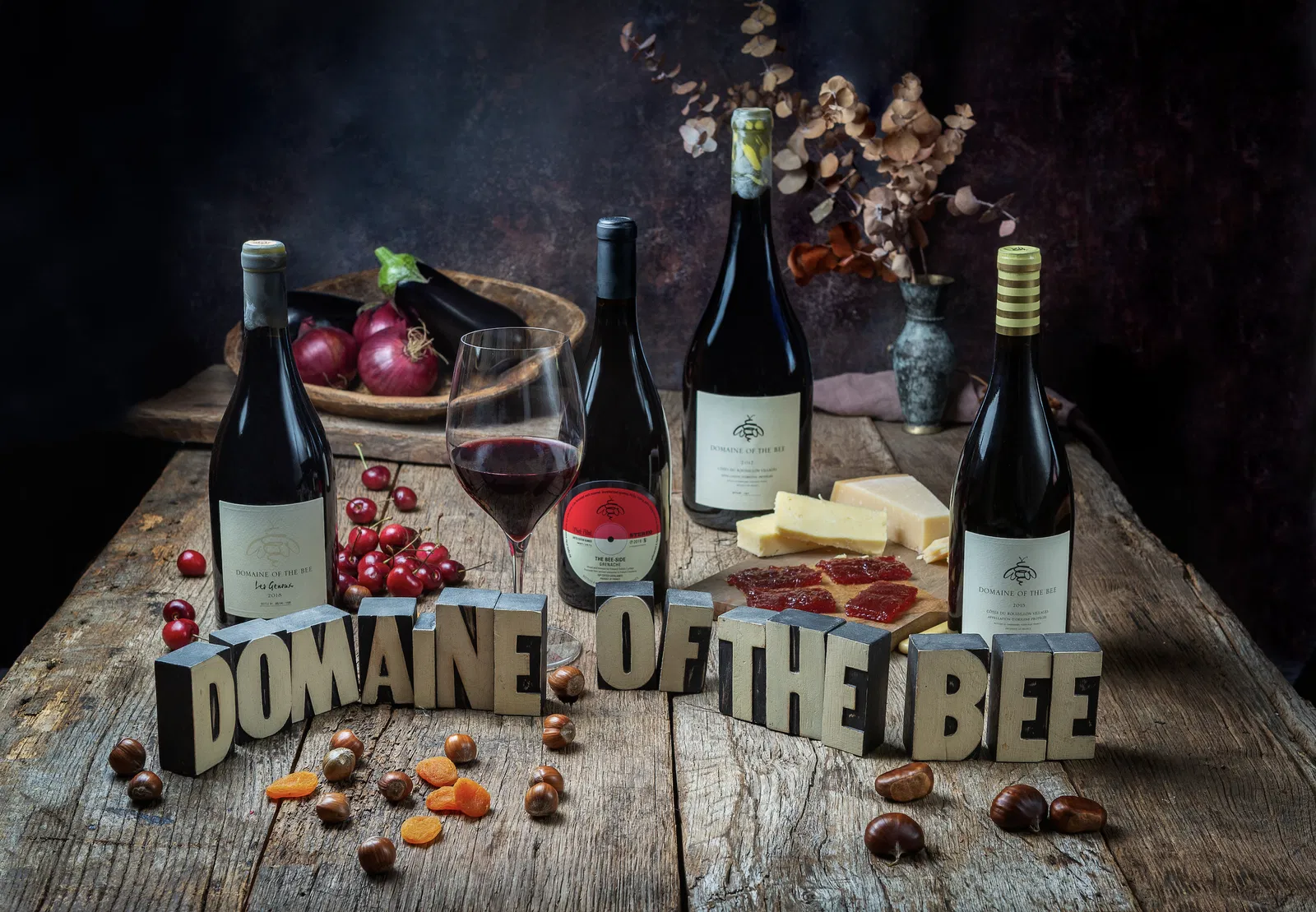
Domaine of the Bee began with a holiday. In late 2003, Master of Wine Justin Howard-Sneyd and his wife Amanda stumbled across Maury, an ancient winemaking village in a striking Roussillon valley, and fell for it. Four hectares of old Grenache and Carignan were found, a company was formed, and one of the region's most characterful small labels was born. The wines are made with Perpignan winemaker Jean-Marc Lafage and sold direct to a devoted following on both sides of the Atlantic.
A serious winery, and a very busy owner
Justin is a Master of Wine with a career alongside the domaine: a former Sainsbury's buyer and head of wine at Waitrose, now consulting, judging and writing. Domaine of the Bee is not a hobby he fits in around the edges, but his time is finite, and he would rather spend it on the wine and the people who drink it than on moving orders between systems.
That shapes what the software has to do, because the wine club is such a big part of the business. Started in 2014 and grown almost entirely by word of mouth, it now runs to 450 members who take around 80% of everything the domaine makes.
Justin has written about why he does this at all, and the answer he lands on is connection: to the land, to the seasons, and to the people who open a bottle around a table together. For most of those 450 members, the club is that connection. It arrives at their door, and it should never feel like paperwork.
A winery with a full-time team can carry a platform that needs watching: someone will spot the failed renewal, someone will rekey the order that did not reach the warehouse. Every step done by hand is a step where one of those 450 shipments can go astray, and every hour spent on it is an hour not spent on the wine. Automating it is not about caring less. It is about the club renewing, charging, chasing and shipping reliably, every time, without a person in the middle of it.
With its previous provider, Blackboxx, sunsetting their system, Justin neeed a solution with the support and responsiveness the business needed. For an operation built on connections, a platform you cannot get answers about is one you end up checking on, and that is time taken from somewhere else.
“Marzipan is incredibly easy to use, and extremely flexible and configurable. It makes recurring subscription wine clubs much easier than any other system I have used, and copes with pretty much everything we have thrown at it.”

A club that renews itself
On Marzipan, the club looks after itself. Renewals come round, cards are charged, failures are retried and chased, members pause and skip and come back. None of it needs to be a date in someone's diary.
Fulfilment works the same way. Domaine of the Bee's wine is stored and shipped by London City Bond , and Marzipan talks to them directly, so an order or a club shipment becomes a dispatch instruction at the warehouse without anyone copying it out or chasing it through.
And when it does need a human
Automation only takes you so far. Sooner or later a customer wants a shipment held, a club needs a wrinkle it did not have last year, or a compliance rule changes, and you need to reach someone who understands the product. That was the other half of the decision.
Marzipan is independent and founder-led, so when a producer asks for something it reaches the people who build it rather than a queue. Justin has a say in what gets made next, which matters more than it sounds: the wineries using the platform are the ones who know what is missing from it.
The result
A club of 450, a direct-sales business and a fulfilment chain, all running the way they should without being nursed along. Justin's attention goes where he wants it: to the wine, and to the people who have been drinking it for years. The platform gets on with the rest, which for Domaine of the Bee was the point.