One shop, every market you sell into
Set up a market for each region you sell to, each with its own currency, prices, range and shipping rates. Customers see local prices and pay in their own money. You still see one business.
Markets
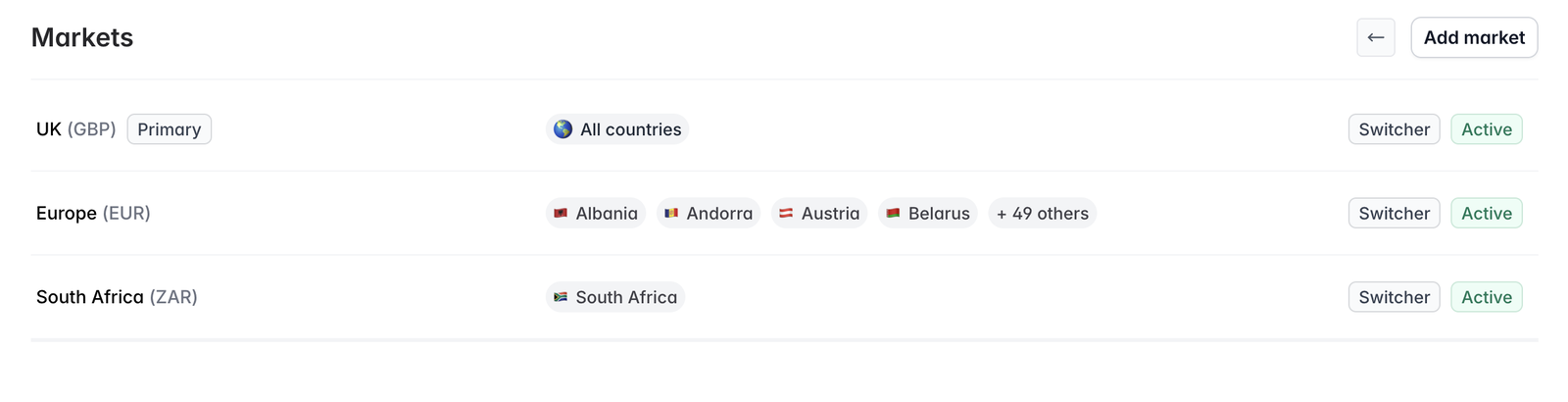
A market for every region you sell to
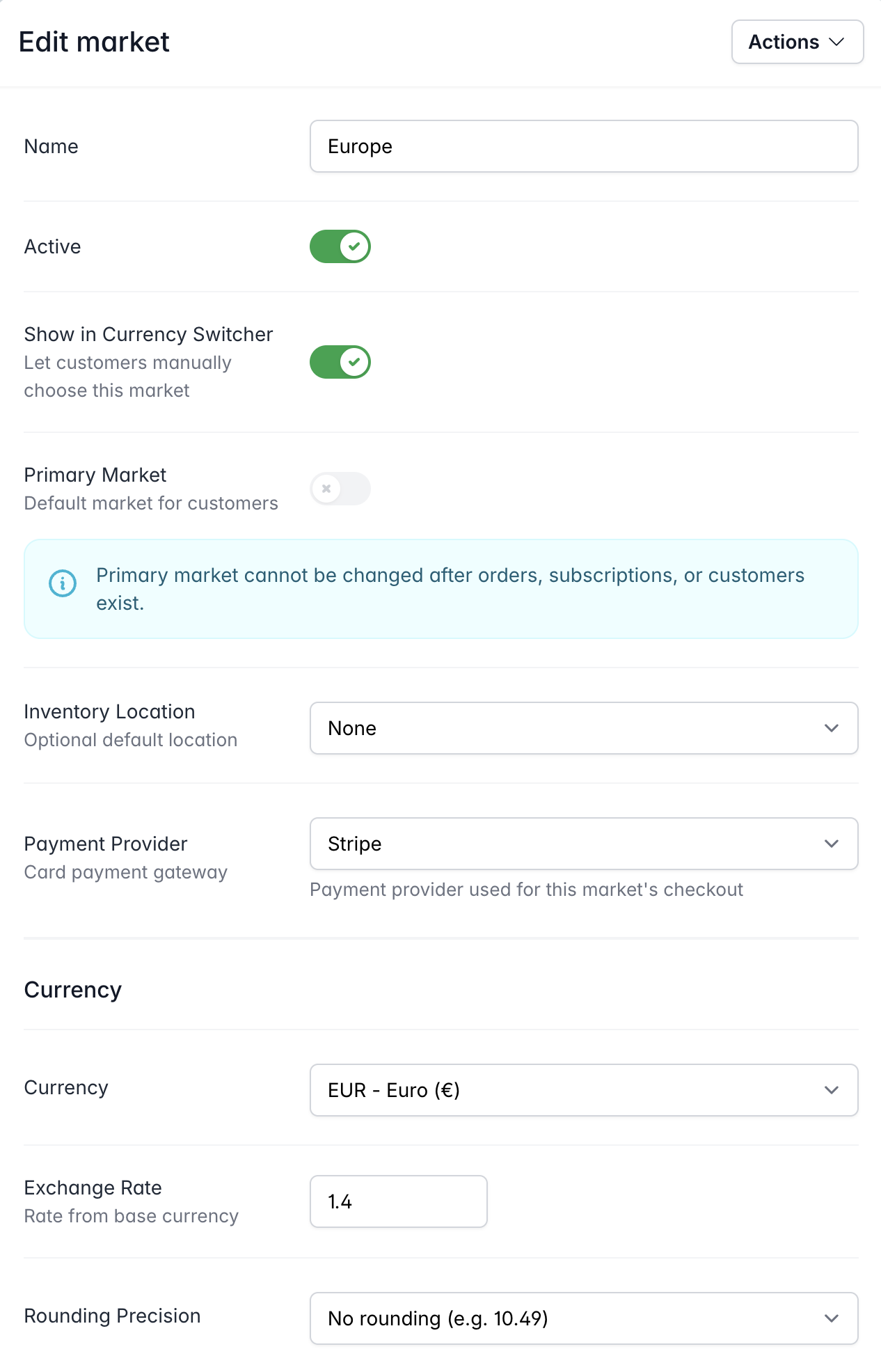
A market is a region you sell into: your home market, the EU, South Africa, wherever your wine ends up. Each one has its own currency and its own exchange rate, which you set and control. Marzipan works out where a visitor is and shows them prices in the currency they think in, so nobody has to open a converter in another tab to find out what a bottle actually costs. There is no second site to build: products, checkout and the web components are market-aware already.
Pricing
Convert it, or set it yourself
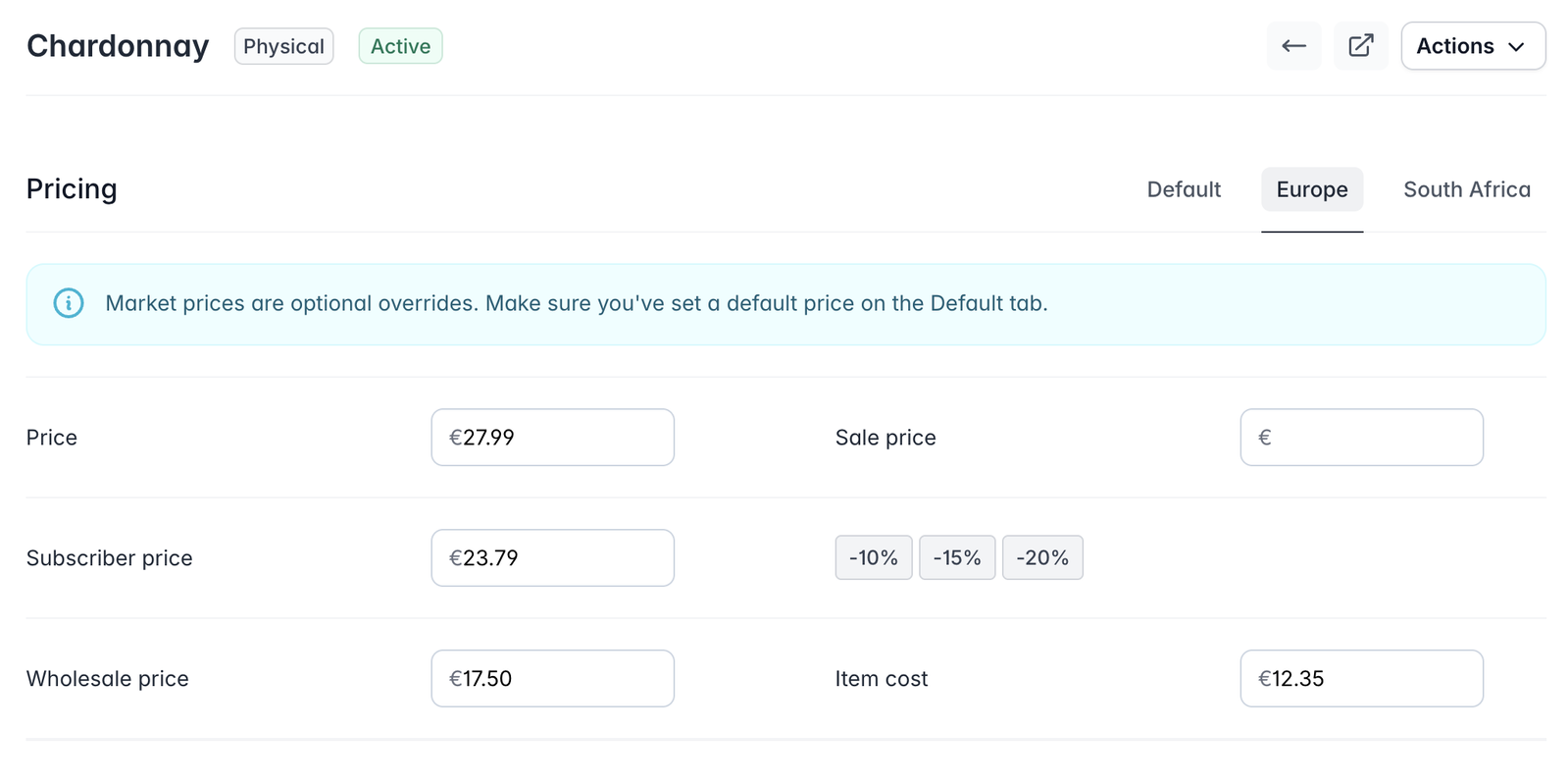
There are two ways to price a market. The quick way: keep your prices in your base currency, give each market an exchange rate, and every price converts across the board. Change the rate and they all move with it. The precise way: override any product in any market with an exact figure, so the flagship is €50 in Europe whatever the rate happens to be. Either way, customers pay in their own currency at the checkout, rather than a converted total and a surprise fee on the statement afterwards.
Range & shipping
Different range, different rates
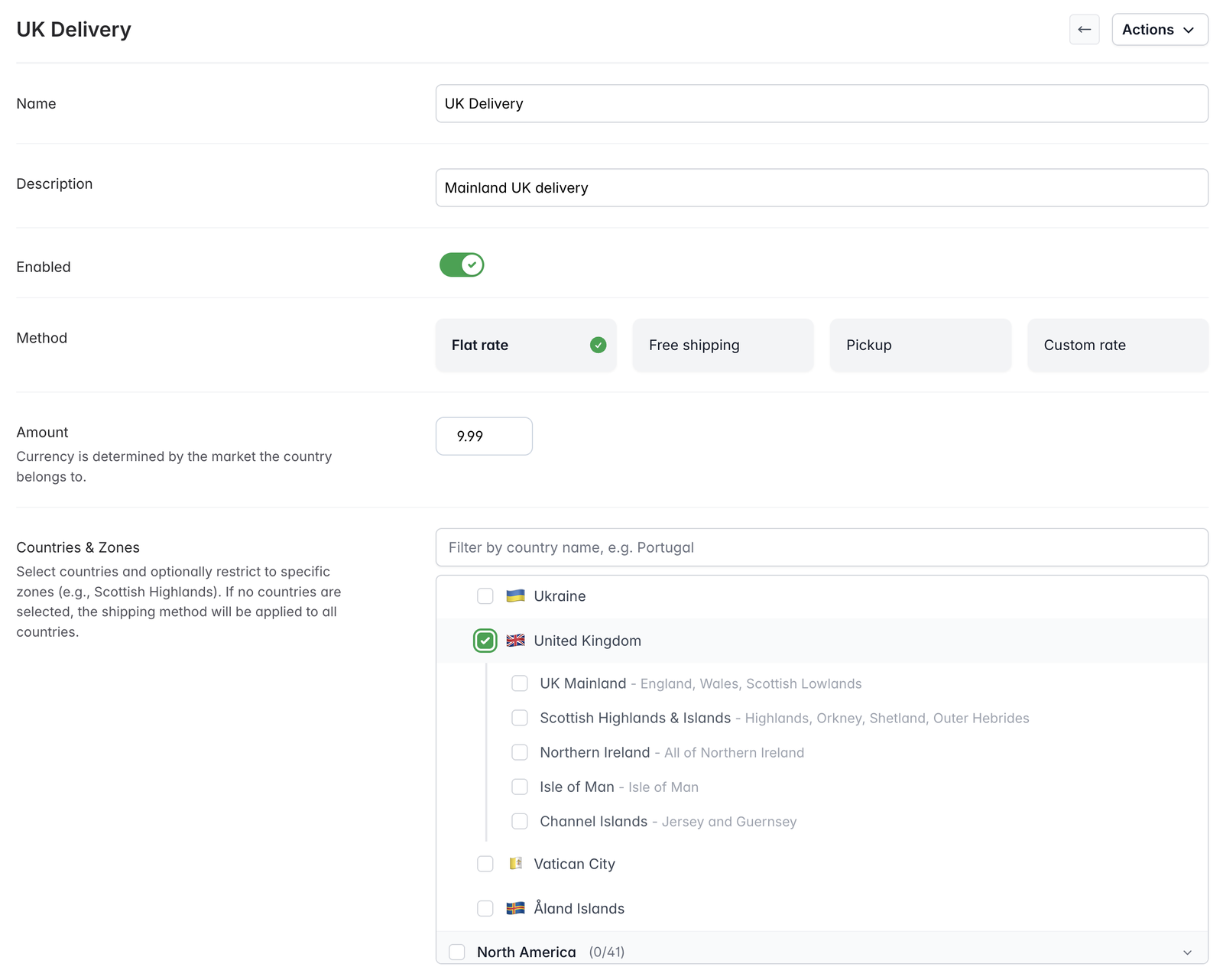
Not every wine goes everywhere. Choose which products appear in which markets, so a bottle you cannot export, or a release meant for one region, is simply not there in the others. One product, one record, and the market decides who sees it. Shipping follows the same logic: zone-based rates worked out from the postcode, with zones built in for UK Mainland, the Highlands and Islands, Northern Ireland, the Isle of Man and the Channel Islands, and for South African cities and remote areas. Charge by weight band where that is how it works out.
Reporting
The whole business, or one market at a time
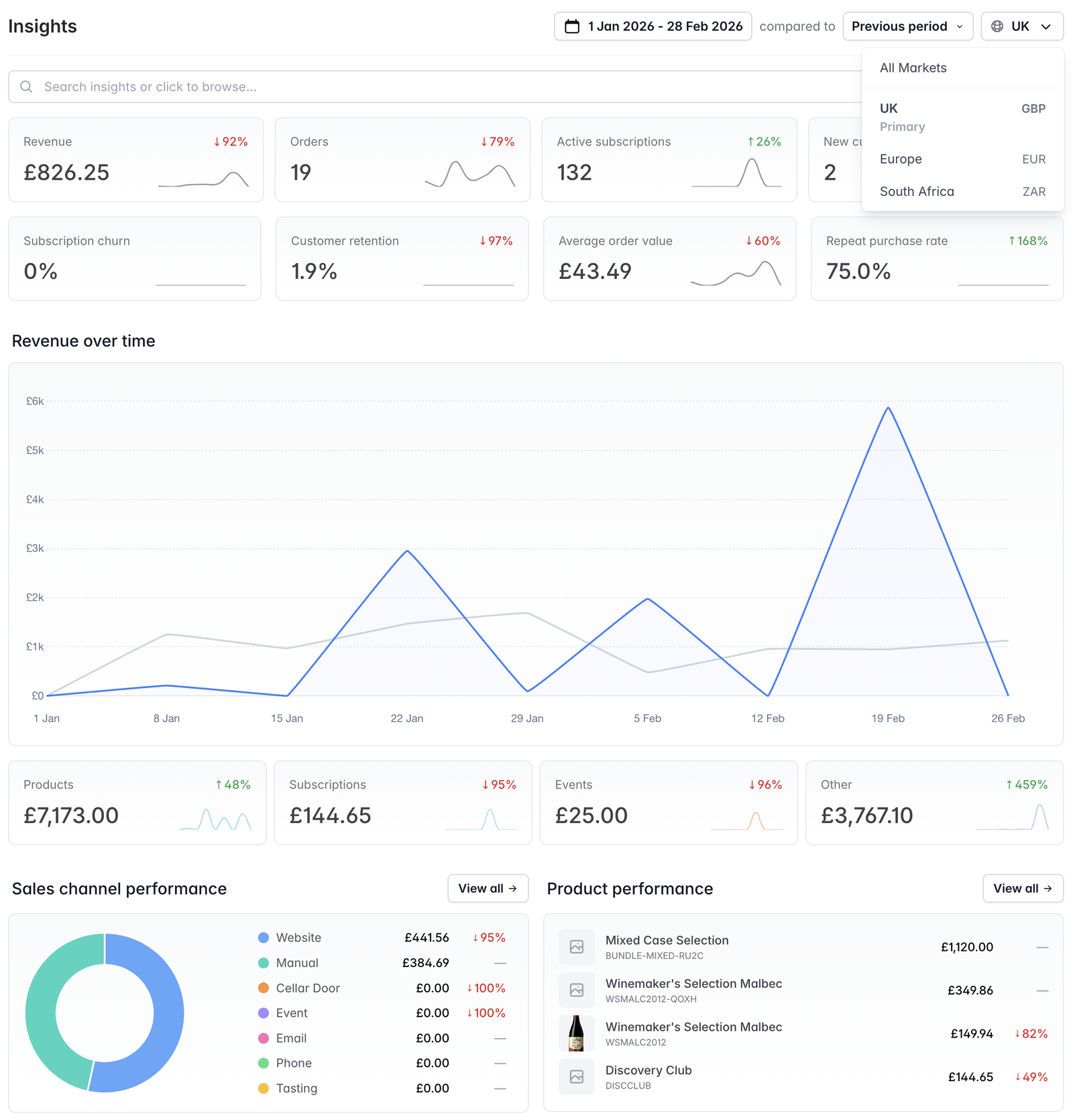
Selling in several currencies usually makes the numbers harder to read. Every order stores the exchange rate as it was on the day, so your history stays accurate however rates move afterwards. In Insights, view everything converted to your base currency for the whole picture, or filter to one market and read it in local currency: rand for South Africa, euros for the EU. Customer segments know about markets too, so you can write to one region without exporting a thing.
Built in essentials
The parts of selling in more than one place that usually need a plugin.
Detection
Local prices on arrival
Visitors land in the right market for where they are, with the right currency and range, without being asked to pick one.
Subscriptions
Clubs stay in currency
A member's market is fixed when they join, so they are billed in the currency they signed up in for as long as they stay.
Inventory
Stock by location
Hold stock in more than one place, so what is at the winery and what is in the warehouse are not the same number.
Visibility
Catalogue per market
Hide any wine from any market: nothing to export, a region-only release, or a bottle that has run out where it matters.
Notifications
Back in stock, per market
Customers ask to hear when a sold-out wine returns, and the setting is yours to make market by market.
History
Rates stored per order
The rate at the moment of purchase lives on the order, so last year's figures do not shift when this year's rate does.
Explore other features
It is all one platform, so your customers, orders and content live in one place rather than scattered across separate tools.
Commerce
Seamless e-commerce
Products, cart and a checkout built for shipping wine.
Subscriptions
Wine club management
Wine clubs and subscriptions, native rather than bolted on.
Gifting
Gift vouchers & gifting
Sell vouchers, and send an order or a club to somebody else.
Events
Tastings & event tools
Sell tastings, tours and dinners through the same checkout.
CMS
Website & content tools
Pages, blog and content in the same place as your shop.
Insights
Customer insights
See what is selling, to whom, and where it goes.
App
The app for iPhone
Orders, customers and a mini POS in your pocket.
API
Build your own front end
A REST API and drop-in web components to build with.
Don't just take our word for it
“We made the switch from WooCommerce to a custom solution powered by Marzipan. Managing our orders is a breeze and the flexibility of the subscriptions API has allowed us to enhance our old vine adoptions offering.”

“Marzipan is incredibly easy to use, and extremely flexible and configurable. It makes recurring subscription wine clubs much easier than any other system I have used, and copes with pretty much everything we have thrown at it.”